Case Study 2: Staff Profile Messaging Strategy
How I Engineered a Content Governance and Intake Workflow to Standardize 40+ Stakeholder Profiles
My Impact at a Glance
Strategic Messaging Frameworks: Led the content standardization strategy for 40+ active staff web profiles to increase department approachability and narrative brand trust.
Workflow Engineering: Built a zero-to-one asynchronous intake and approval playbook that eliminated project bottlenecks across 40+ individual stakeholders.
System Longevity: Created a biography model, submission pipeline, and operational checklists so structurally sound that they remain the onboarding standard for all new hires today.
Workflow Engineering: Built a zero-to-one asynchronous intake and approval playbook that eliminated project bottlenecks across 40+ individual stakeholders.
System Longevity: Created a biography model, submission pipeline, and operational checklists so structurally sound that they remain the onboarding standard for all new hires today.
1. The Challenge: Disjointed Messaging & Stakeholder Bottlenecks
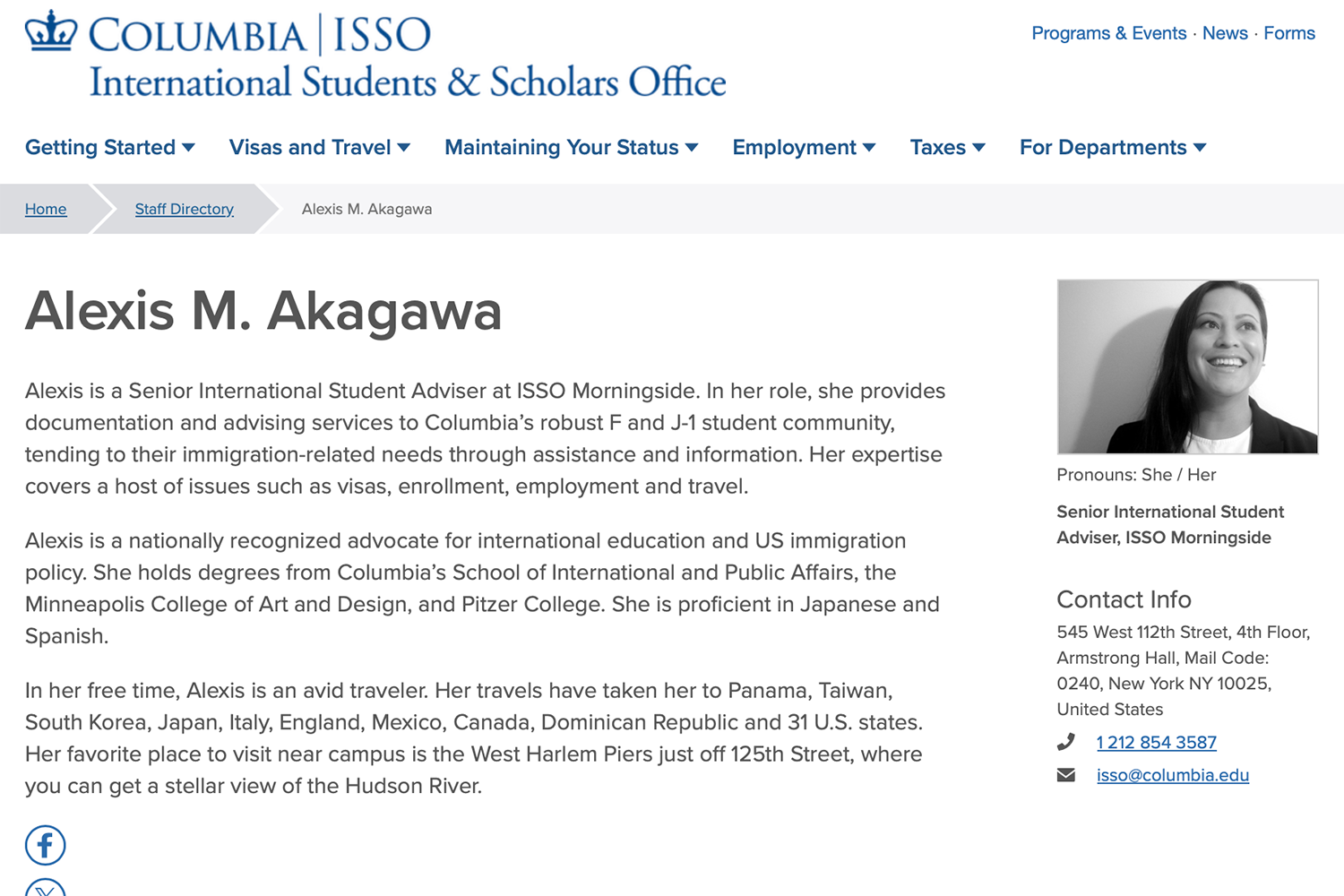
To make our department more human and approachable, I was tasked with completely overhauling 40+ active staff web profiles. At the time, our directory was completely fragmented: bios lacked uniformity, both narrative and visual; they varied wildly in structure, length, and information. Most read with a stiff, unengaging tone.
The biggest hurdle went beyond the copywriting; it was the operations. Managing a high-quality content rewrite across 40+ busy, decentralized team members in a tight, 3-week turnaround can easily turn into a project management nightmare of endless email chains and delayed approvals. I needed a system that enforced absolute brand consistency while keeping the project moving efficiently. As a systems-minded person, I figured building some kind of infrastructure would also make this initiative scalable, to align with the scaling of personnel and employee turnover.
The biggest hurdle went beyond the copywriting; it was the operations. Managing a high-quality content rewrite across 40+ busy, decentralized team members in a tight, 3-week turnaround can easily turn into a project management nightmare of endless email chains and delayed approvals. I needed a system that enforced absolute brand consistency while keeping the project moving efficiently. As a systems-minded person, I figured building some kind of infrastructure would also make this initiative scalable, to align with the scaling of personnel and employee turnover.
2. System Architecture: The Asynchronous Content Pipeline
I knew that trying to interview 40 people manually would stall our velocity. Instead, I treated this as a workflow engineering problem and designed a centralized, asynchronous, Google-powered intake and tracking system.
Step 1: Designing the Flexible Biography Template
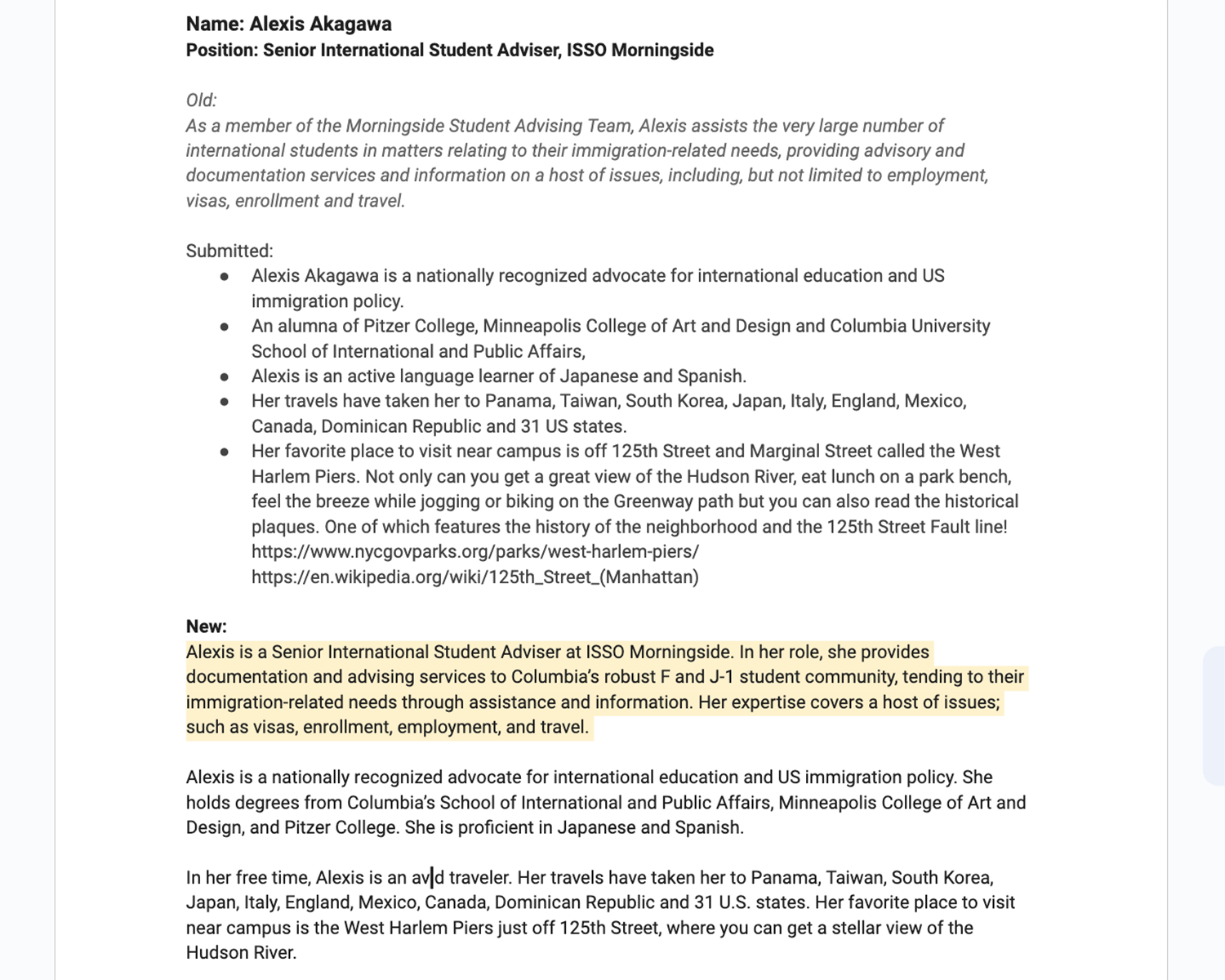
I developed a standardized biography framework that defined strict parameters for layout formatting and narrative length to maintain visual cohesion across our directory. To ensure our profiles didn't sound robotic, I built a flexible prompt block into the submission model. I gave our stakeholders a curated list of personal prompts to choose from—such as sharing their favorite place to visit near campus or their personal interests and hobbies—allowing them to showcase their human side within an established brand boundary.
Step 2: The Automated Intake Architecture
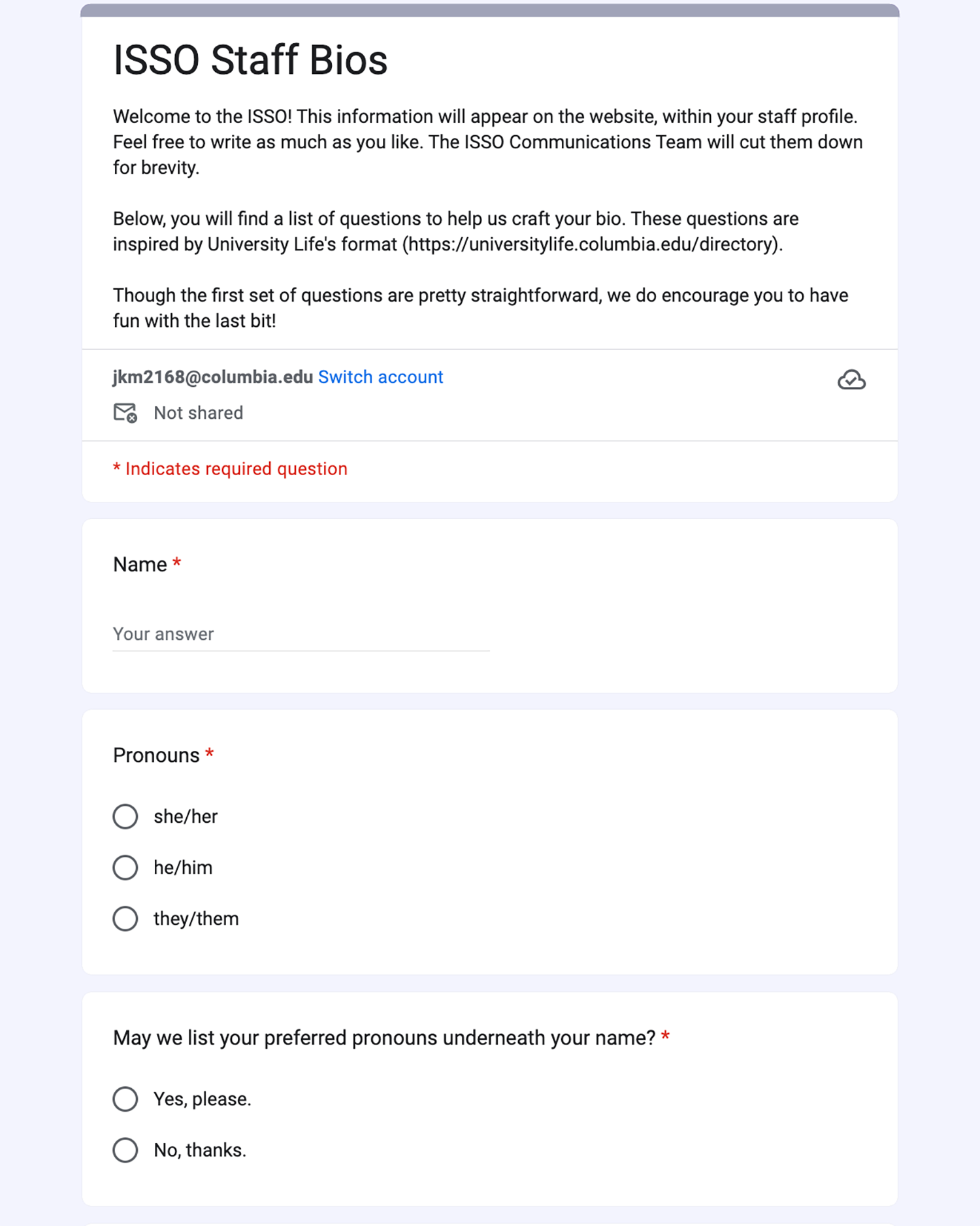
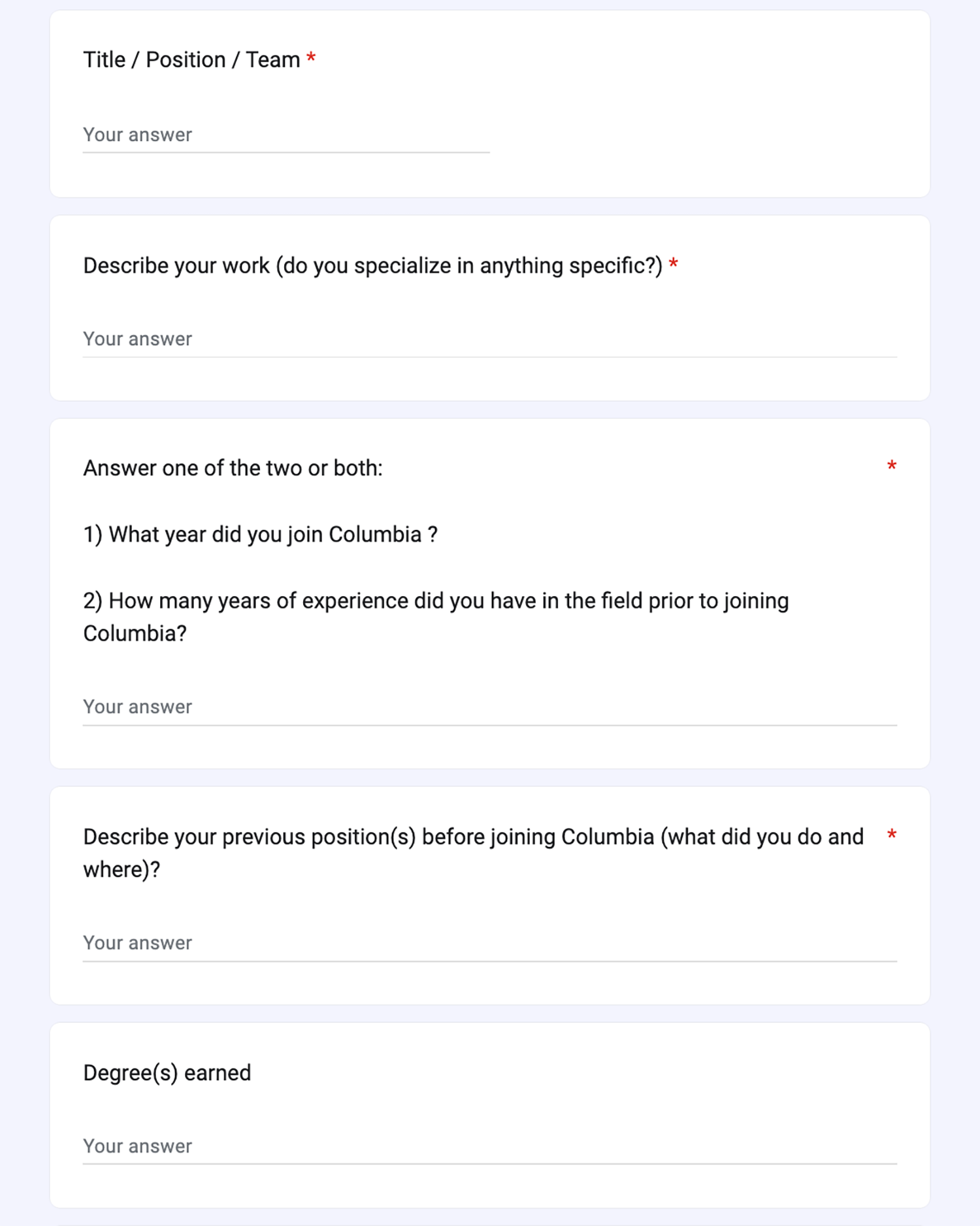
I built a clean, mandatory Google Form submission workflow to automate our data gathering. The form required stakeholders to input their baseline credentials, position details, and chosen personal prompts asynchronously, ensuring that every single entry arrived perfectly pre-formatted according to my template guidelines.
Step 3: Production Tracking & Quality Governance
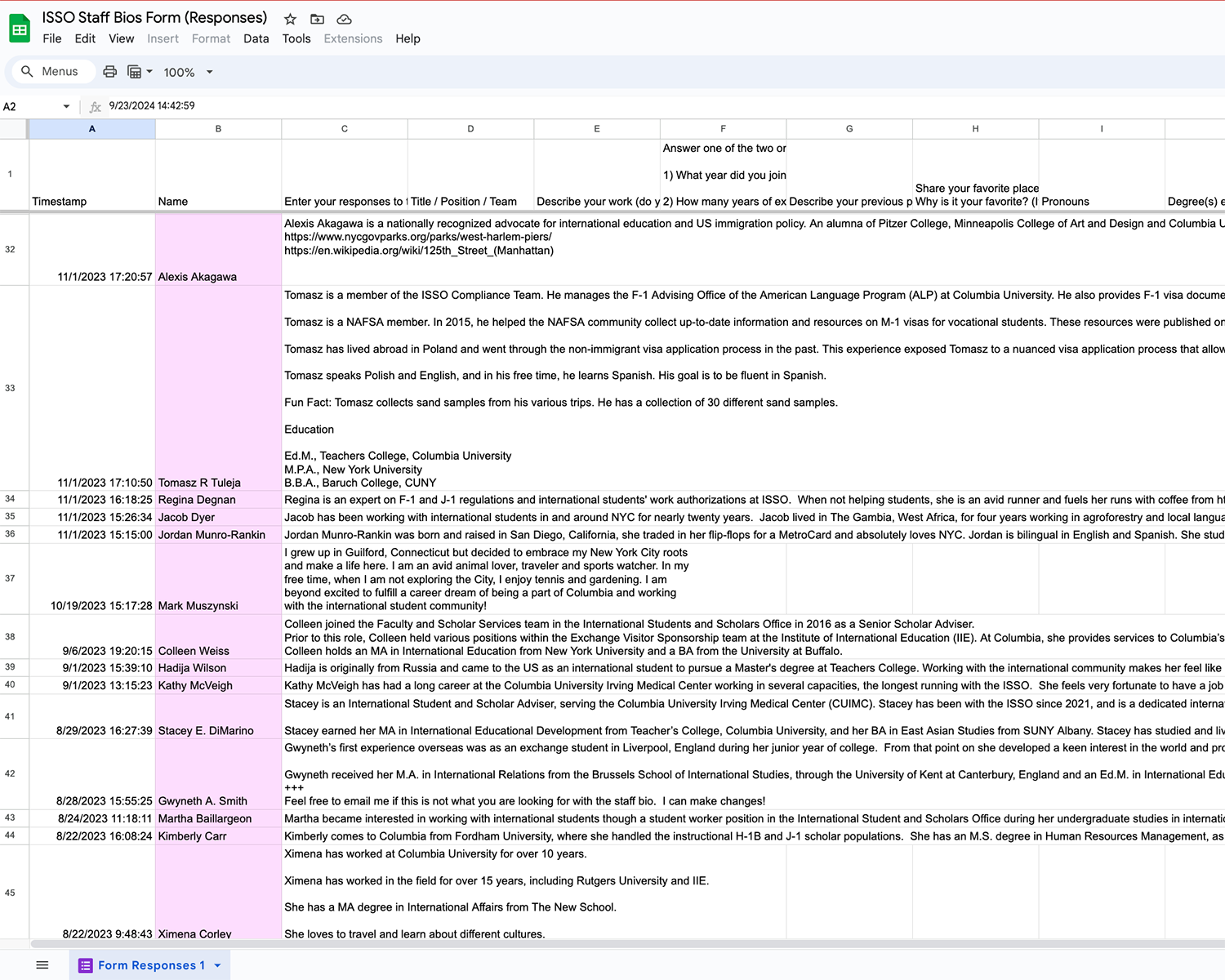
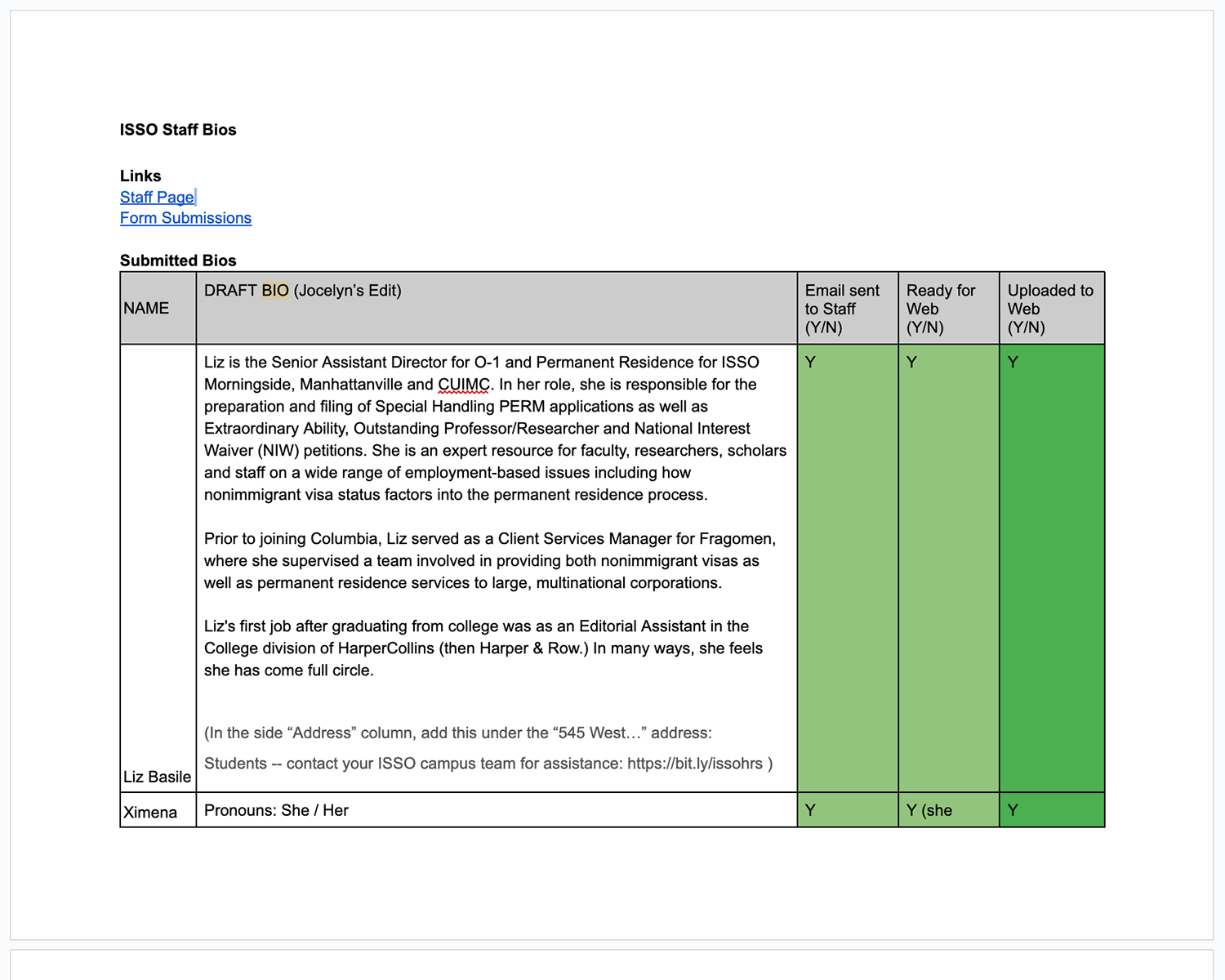
To maintain absolute control over our production pipeline, I routed all incoming submissions into a centralized Google Sheets tracker. I built columns to meticulously monitor each profile's lifecycle status:
Raw Entry (Intake Form) → Submission Tracker (Sheets) → Editorial Staging (Docs Template) → Distribution (Gmail) → Explicit Stakeholder Approval (Docs Table Tracker) → CMS Manual Publish (Drupal).
No text was uploaded to our website without a verified cross-reference and sign-off.
Step 1: Designing the Flexible Biography Template
I developed a standardized biography framework that defined strict parameters for layout formatting and narrative length to maintain visual cohesion across our directory. To ensure our profiles didn't sound robotic, I built a flexible prompt block into the submission model. I gave our stakeholders a curated list of personal prompts to choose from—such as sharing their favorite place to visit near campus or their personal interests and hobbies—allowing them to showcase their human side within an established brand boundary.
Step 2: The Automated Intake Architecture
I built a clean, mandatory Google Form submission workflow to automate our data gathering. The form required stakeholders to input their baseline credentials, position details, and chosen personal prompts asynchronously, ensuring that every single entry arrived perfectly pre-formatted according to my template guidelines.
Step 3: Production Tracking & Quality Governance
To maintain absolute control over our production pipeline, I routed all incoming submissions into a centralized Google Sheets tracker. I built columns to meticulously monitor each profile's lifecycle status:
Raw Entry (Intake Form) → Submission Tracker (Sheets) → Editorial Staging (Docs Template) → Distribution (Gmail) → Explicit Stakeholder Approval (Docs Table Tracker) → CMS Manual Publish (Drupal).
No text was uploaded to our website without a verified cross-reference and sign-off.
Submission Form

Content Development / Management Process
3. The Before vs. After Results
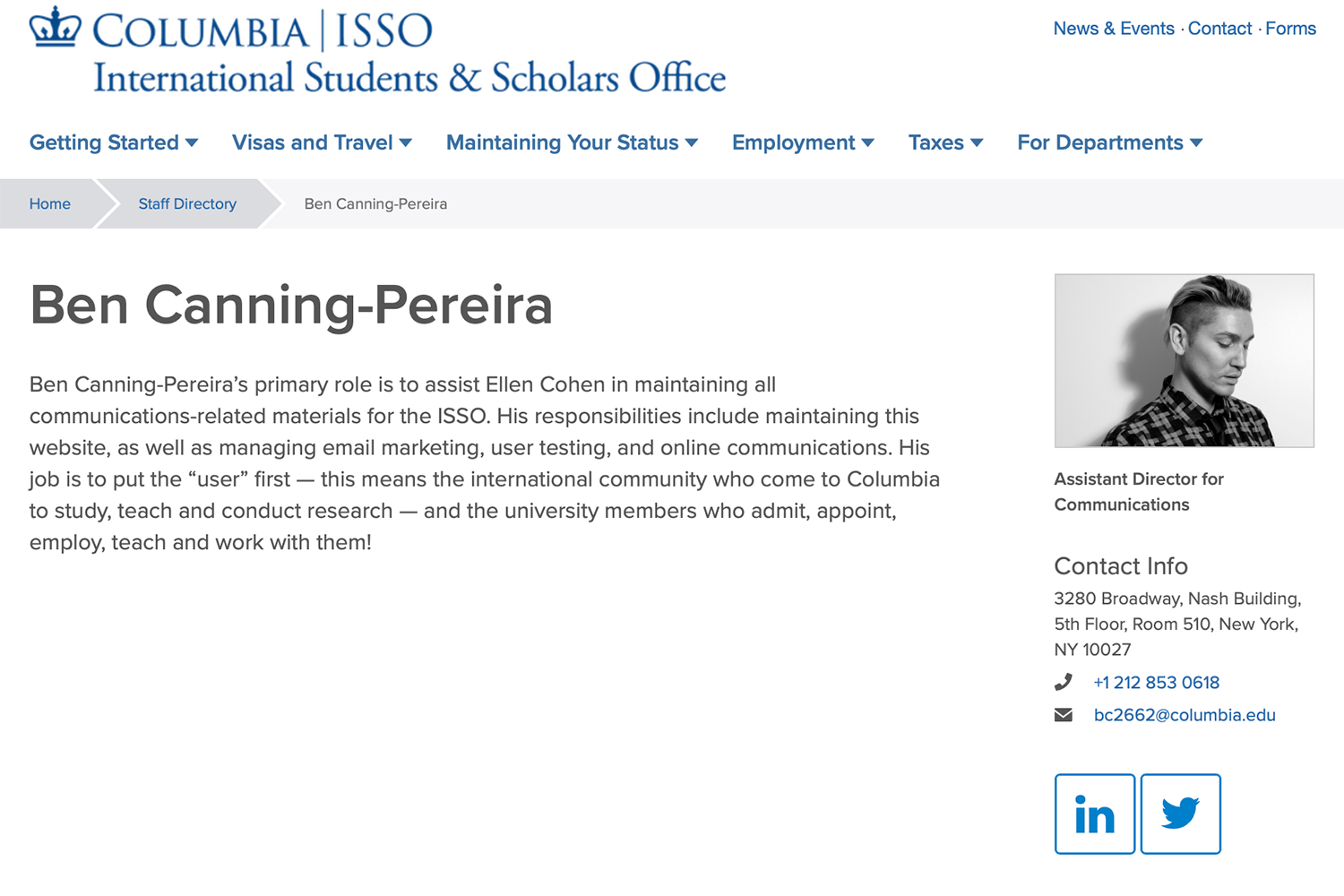
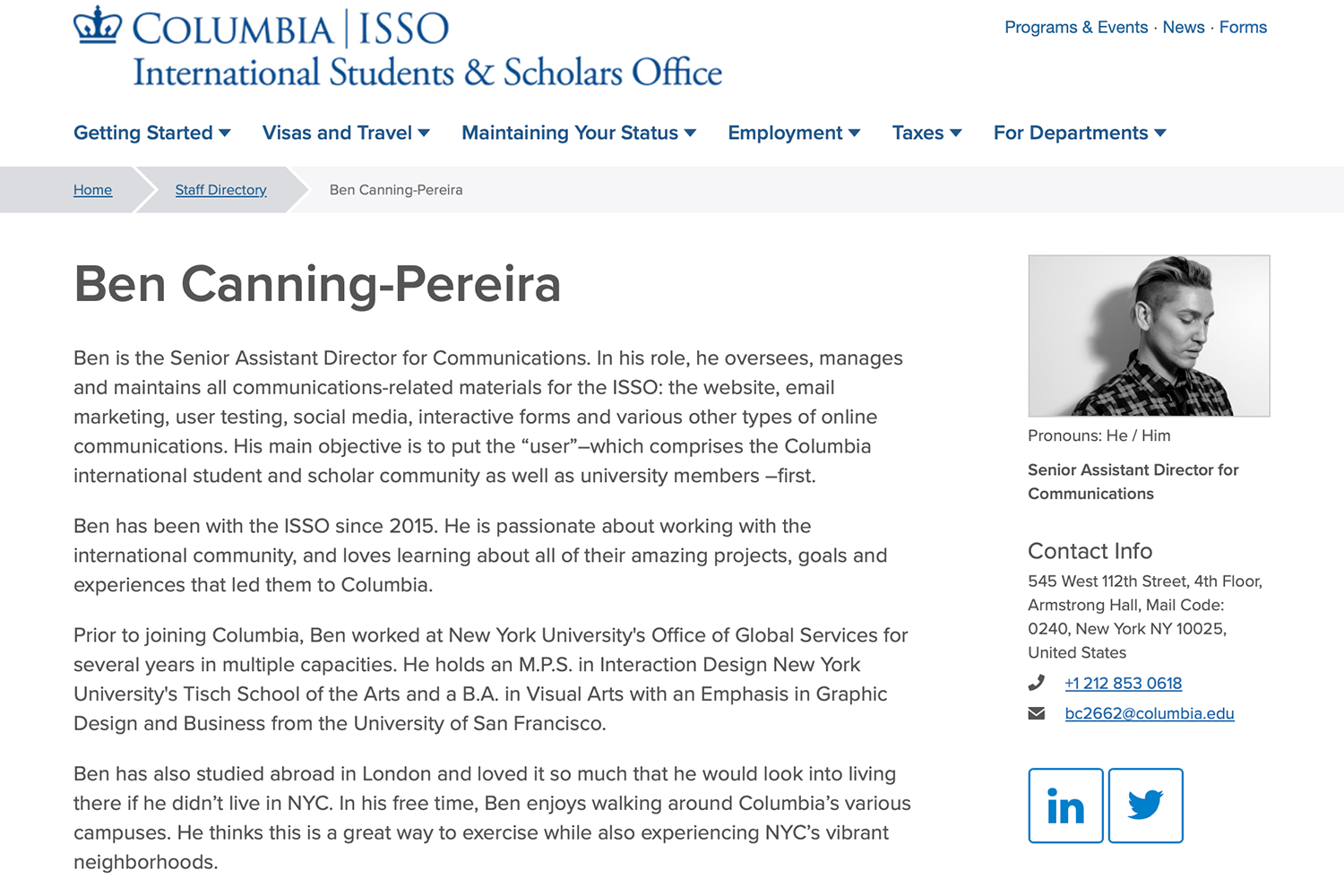
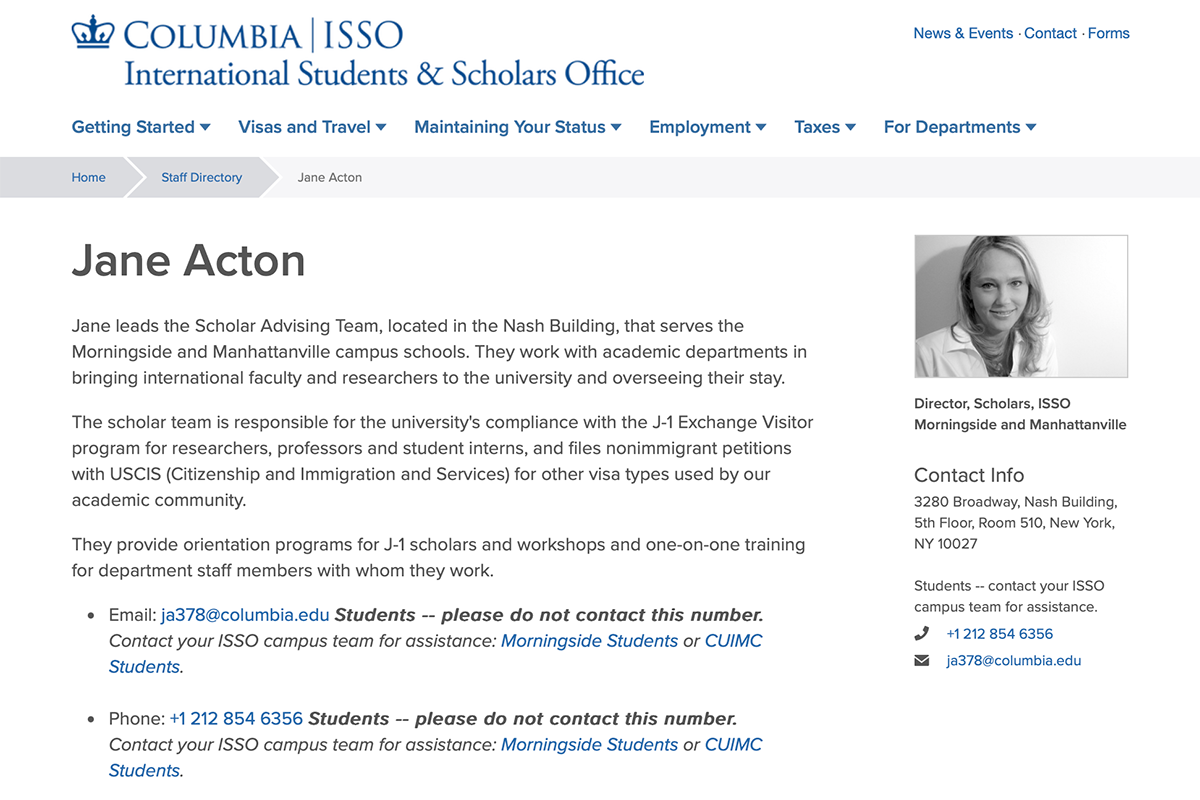
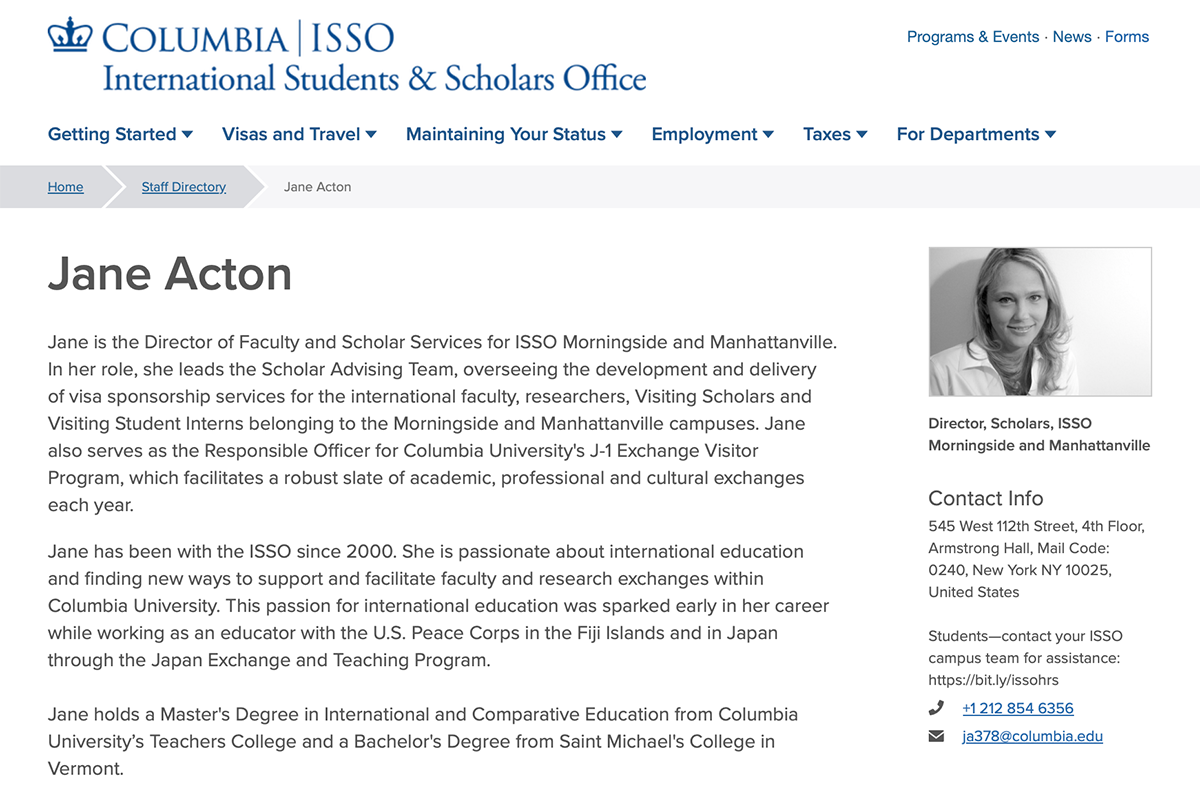
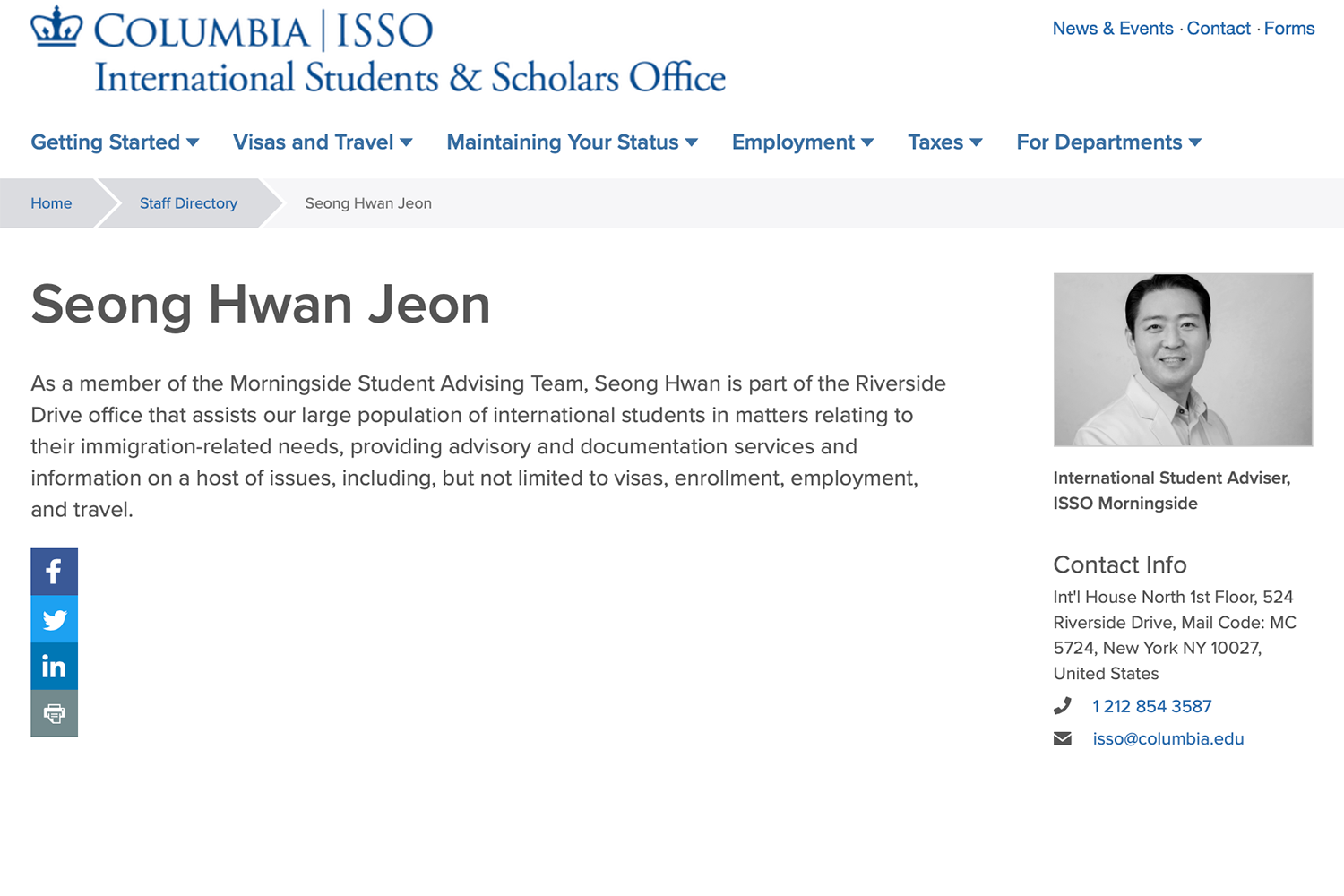
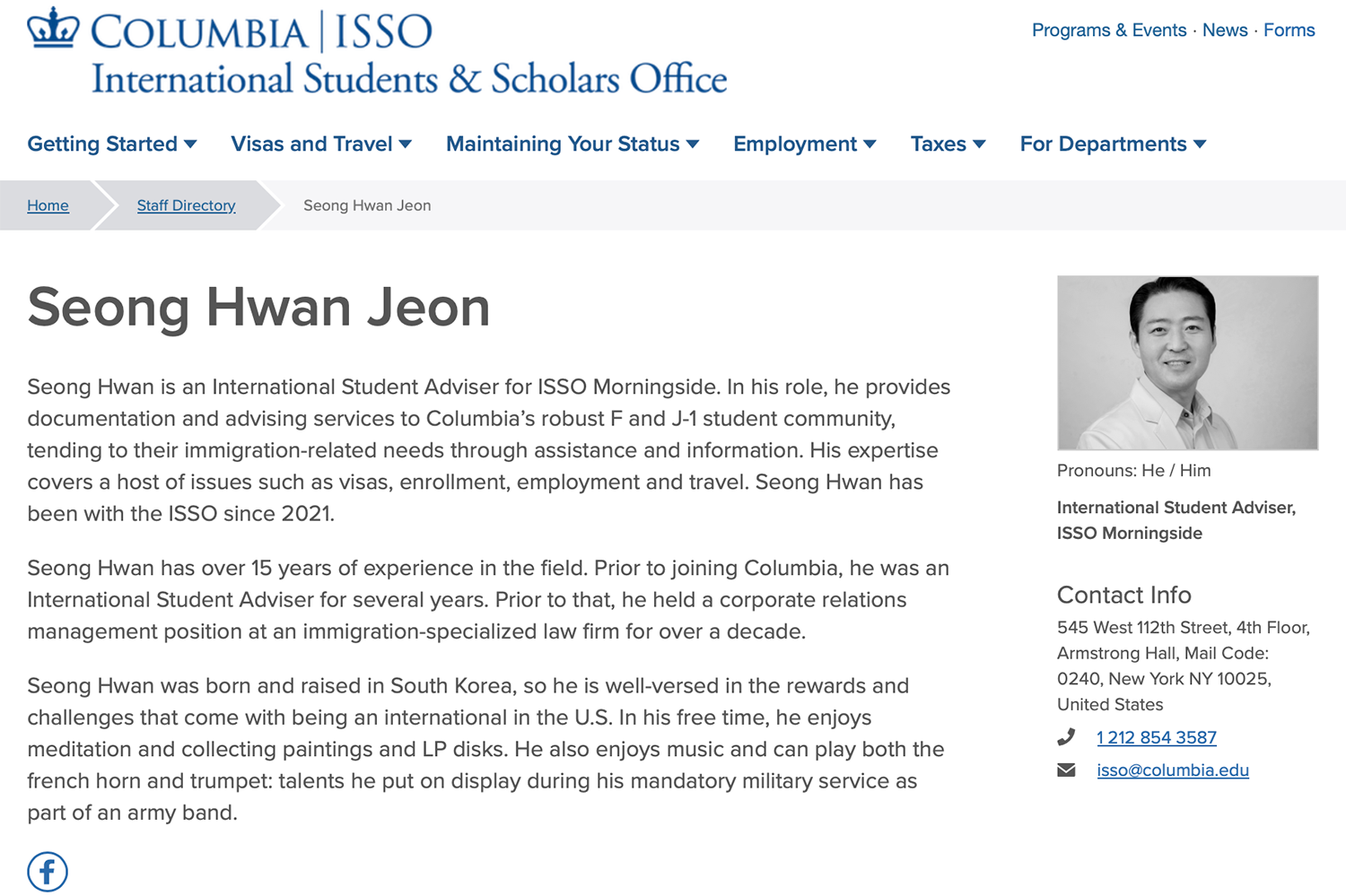
By running every single biography through this structured pipeline, I successfully brought 100% narrative cohesion to our directory. I manually updated all 40+ profiles within our CMS, moving away from walls of dense, unformatted paragraphs into a clean, modern layout featuring explicit title breakdowns, balanced text styling, as well as new (optional) content design additions: dedicated pronoun blocks and icons linking to staff socials.
Before
After

4. Scaled Operational Outcomes
This project proved that content quality can be scaled systematically without sacrificing brand voice or slowing down team operations. I successfully aligned 40+ distinct internal stakeholders under one unified brand identity on time and under pressure. The framework was so operationally efficient that the office permanently adopted my exact biography model, automated submission forms, production spreadsheets, and quality checklists as their mandatory onboarding standard for all future hires.